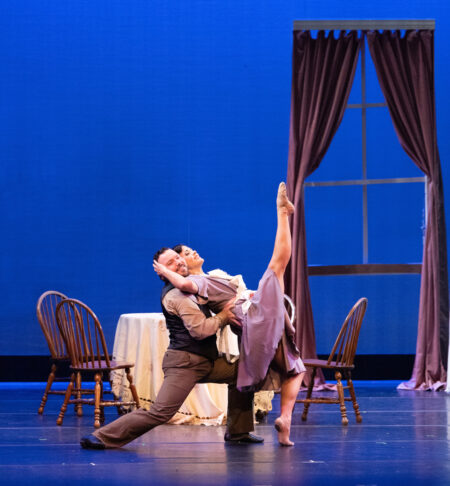

Bach Aria Soloists announce their 2010-2011 season. Secure your special value seat (s) by October 1.
August 27, 2010 · No Comments
→ No CommentsTags: Performing
Takers opens August 27
August 27, 2010 · No Comments
“Takers” Gives You a Solid Movie
Reviewed by Jason Gregg
”I need a new suit.” That’s what I kept thinking during the movie “Inception” and again during “Takers.” I like that Hollywood is dressing up their leading actors more often these days.
“Takers” is a story about a group of efficient, professional thieves who meticulously plan their robberies a year in an advance. They take their jobs seriously and leave little room for error. There is no one shining star in this crew. The team has great balance between the members played by younger Hollywood such as Hayden Christensen, Paul Walker and Michael Ealy.
The audience is tossed into two different action sequences from the start with no explanation of why we are watching these scenes. It’s like waking up in the middle of cage fight then getting punched in the back of the head and the face simultaneously. After the disorientation, your head starts to clear up and things start coming into focus. The moment of clarity arrives and you are in the movie.
After the opening bank robbery we are introduced to the team of Takers. These guys are suave and know how to present themselves. It was like watching a group of “Esquire” magazine models relax after a hard day at the office (if that office specialized in bank robberies). They all wear expensive suits, drink high-end scotch and smoke fine cigars. They each retreat to their own slice of heaven to relax. The director (John Luessenhop, I don’t know who he is either) spends a lot of time building their image through a slow motion reunion before they go into their own private club. For having only recently done a bank job together they seem to revel in their male bonding and handshaking quite extensively.
This life of the Takers seems too good to be true with very little conflict. That is why we are introduced to Ghost (played by Tip T.I. Harris) an ex-member of the Takers crew who is being released from prison. Seems that back in 2004 these guys did a job where Ghost was shot and sent to prison. He’s not mad about it though, in fact he has one last big score for his old crew.
Meanwhile, the two detectives (Matt Dillon and Jay Hernandez) assigned to the Takers’ bank robbery start gathering the information they need to track this crew down. We turn to the classic “cops and robbers” formula and we have seen it before.
The Takers start getting ready for the heist while more is being revealed about their personal lives. These side stories set the movie apart from the rest of the movies in the genre. In this case it is a close family member that gives Gordon (played by Idris Elba) a reason to accept this heist but it also gives him a lot of problems.
Family is also giving the detectives problems. Jack Welles (Dillon), the detective, is a single dad who is having problems going through his separation. This immediately brings us back into the typical cop drama. Why is it that almost every movie cop in LA is divorced? Seriously, I think Danny Glover’s character in “Lethal Weapon” was the last detective who as able to bust bad guys, take hundreds of bullets to the chest and still keep his marriage together.
The story progresses at a good pace until the big action fueled bank heist. There was a little too much of the shaky camera syndrome. Note to Hollywood - we know what you are doing, stop it. The shaky camera action sequences don’t work every time. Slow it down and try something else; it’s giving us a headache.
Warning, you have seen the heist scene before in a previous film, I won’t say which one but this time they didn’t use Mini Coopers for the action sequence. Instead there was an elongated foot chase that seemed to last for hours. Another note to Hollywood - most Olympic athletes can’t fall from a tall building, be hit by a bus and then sprint for a 1/4 mile while dodging bullets so don’t try making us believe that Chris Brown can pull it off and still look good doing it.
Should you see this movie? Yes, it will keep your attention and most of the action is believable. There is genuine balance and chemistry amongst the characters. The director did try something different by putting a twist in the middle of the movie instead of at the end. He gets points for that. He also gets points for the elaborate shoot out scene; I applaud his choice of string instrument background music and lack of loud gun noises to give it a huge impact. Now if you will excuse me, I am off to shop for a new suit.
→ No CommentsTags: Cinematic
Silent Film Series: September 2 - October 7
August 27, 2010 · No Comments
Tivoli Cinemas and the UMKC Department of Communication Studies will present a special SILENT FILM SERIES beginning September 2 that will culminate with the Kansas City premiere of THE COMPLETE METROPOLIS the first week of October.
Tickets are available day of show only at the Tivoli Box Office. The first five films in the series are $4.00 per screening and free for UMKC Students/Staff with ID. The showings of THE COMPLETE METROPOLIS are presented at regular Tivoli ticket prices for the general public and free for UMKC Students/Staff with ID.
The films selected for the series are:
PANDORA’S BOX
Thursday, September 2 • 6:30pm
One of the masters of early German cinema, G. W. Pabst had an innate talent for discovering actresses (including Greta Garbo). And perhaps none of his stars shone brighter than Kansas native and onetime Ziegfeld girl Louise Brooks, whose legendary persona was defined by this lurid, controversial melodrama. Sensationally modern, the film follows the downward spiral of the fiery, brash, yet innocent showgirl whose sexual vivacity has a devastating effect on everyone she comes in contact with. (133 minutes).
CITY LIGHTS
Thursday, September 9 • 6:30pm
Quite possibly the most perfect romantic comedy ever, and not a single word is spoken. You are never lost in translation as Charlie Chaplin at his masterful best creatively communicates each hint of emotion subtly to his audience. He adores the blind girl who sells flowers on the street corner, so much that he sacrifices to raise funds for her operation. Unfortunately,the girl mistakes the tramp for a millionaire. Can the tramp win the heart of the girl who knows not what he did for her? Heartfelt, hopeful and wonderful. (90 minutes)
PASSION OF JOAN OF ARC
Tuesday, September 14 • 6:30pm
With its stunning camerawork and striking compositions, Carl Theodor Dreyer’s 1927 masterwork convinced the world that movies could be art. Renée Falconetti gives one of the greatest performances ever recorded on film, as the young maiden who died for God and France. Long thought to have been lost to fire, the original version was miraculously found in perfect condition in 1981—in a Norwegian mental institution. Spellbinding and captivating on the big screen. (82 minutes)
SUNRISE
Thursday, September 30 • 6:30pm
One of the last great silent films that is filled with so many wonderful moments which helped it win the first and only Academy Award for Best Artistic Production in 1929. Janet Gaynor and George O’Brien star in a story of a country man torn between his wife and a seductress Director F. W. Murnau’s visual mastery, his marriage of expressionism, visual lyricism and the daring technological ambition of pre-sound Hollywood, shows silent cinema at its pinnacle and has gone on to exert a profound influence on countless subsequent films. (110 minutes)
THE COMPLETE METROPOLIS
One Week Only — October 1-7
Our Silent Film Series culminates with a weeklong showcase of THE COMPLETE METROPOLIS. Seldom has the rediscovery of a cache of lost footage ignited international curiosity as did the announcement, in July 2008, that an essentially complete copy of Fritz Lang’s revered masterpiece had been found. Join us for Kansas City’s first big screen showings with the lost footage. Visit www.TivoliKC.com for METROPOLIS showtimes, previews & special links.
→ No CommentsTags: Leisure · Cinematic
New Exhibition "Man & Machine: The German Solider in World War I" - September 3
August 27, 2010 · No Comments
“Man & Machine: The German Soldier in World War I” Offers Rare Insight The special exhibition “Man and Machine: The German Soldier in World War I” tells a tale that no American museum has ever told before – the story of the Great War from the German viewpoint. The exhibition opens September 3, 2010 at the National World War I Museum. It will be housed in Exhibit Hall, one of the two original 1926 buildings which flank the Liberty Memorial Tower. Access to the special exhibition is included with admission to the National World War I Museum. This new perspective – one that only ninety years after the war can provide – will explore the machines of war and the men who used them. Visitors will see the war through the eyes of the German soldier – his words, his technology, and the actual objects used by him to fight and survive. Nearly all of the objects and documents will be on display to the public for the first time. “This is a truly unique exhibition for this country. It explores this pivotal world event from a total new perspective,” says Vice President of Museum Programs Eli Paul. “Not only are you seeing the Great War through the eyes of those who fought against America and its In 2009 during the conceptual development of this special exhibition an extraordinary historical collection was donated to National World War I Museum. The Carl H. Hauber donation holds the record as the largest number of historical objects ever given by one donor in the Museum’s ninety-year history. The private collection of 1,700 objects, collected with a discriminating curatorial eye and almost encyclopedic in nature, essentially told the story of “I was thrilled to see the tremendous number of personal items that were part of the donation from the Hauber family,” explains Curator Doran Cart. “It’s not just weapons. Objects from the German home front, equally poignant, are included in the exhibition. Surprisingly, the soldiers carried many personal items throughout this intense conflict.” Some of the most distinctive items included in the exhibition are: At the beginning of the war, the common German infantryman still retained equipment and traditions from decades before. As the war progressed, many innovative This exhibition is partially funded by the Kansas City, Missouri Neighborhood Tourist Development Fund. Man & Machine – Insight through the German Soldier’s Own Words How better to understand the experiences of one’s adversary than through their own words? These quotes, which are integrated into the exhibition, also give insight into how those fighting the war felt about the advance in technology. “Life is one hell, death is a mere trifle; we are all screws in a machine that wallows forward, nobody knows where to.” “After only ten minutes, the battle of the Somme was working away like a giant machine. Everything operated with a terrible rhythm. . . .Splinters clattered against our steel helmets but we took no notice. An attack absorbs all the senses. . . .” “Whose heart was not in his mouth at times during this appalling storm of steel? All were seized by a deep bitterness at the inhuman machine of destruction which hammered endlessly.” “When I joined the army in the spring of 1916, I carried presumptions that the war would be fought like the 1870 War between German and France. Man-to-man combat, for instance. But in the trenches friend and foe alike suffer from the effects of invisible machinery. It is not enough to conquer the enemy. He has to be totally destroyed.”
Exhibition Previews Hauber Collection of WWI Machine Guns and Related Objects
September 3, 2010 - December 31, 2011
Allies, you are seeing how machines transformed the war. When you look at this material you wonder who is in control…the man or the machine.”
the machine gun during WWI. A stunning addition to the most comprehensive WWI collection in America, several of the historical objects from this donation have been integrated into “Man and Machine” The exhibition serves as a preview of this significant acquisition to the museum collections.
changes occurred in the German infantryman’s equipment and uniform. Steel helmets replaced leather. Body armor, trench clubs, hand grenades, knives for close combat, and even submachine guns were used on the battlefield. Gas masks protected against the terror weapon of poison gas.
– German soldier Ernst Toller, 1916, describing service at the front
– Unteroffizier (Corporal) Feuge, 6th Company, 68th Infantry Regiment, 1916
– Landwehr Leutnant (Territorial Army Lieutenant) M. Gerster, 119th Reserve Infantry Regiment, 30 June 1916
– Reinhold Spengler, 1st Bavarian Infantry Regiment.
→ No CommentsTags: Leisure · Visual
Here and There Opens at the Screenland - Tonight
August 27, 2010 · No Comments
Cinema Purgatorio to open limited-release film in Kansas City
WHO: Kansas City and Screenland Crown Center
WHAT: Here and There, starring David Thornton, Mirjana Karanovic, Branislav Trifunovic, and Cyndi Lauper will open exclusively at the Screenland Crown Center theatre on Friday, August 27.
“Superbly played…beautifully executed…deep emotional roots.” – Natasha Senjanovic, Hollywood Reporter
“…has more than a few moments that linger: like slivovitz, it sneaks up on you.” – Daniel Gold, New York Times
“An excellent tale of two cities…right on!” - Howard Feinstein, indieWIRE
WHEN: Friday, August 27 – Thursday, September 2, 2010
Visit www.Screenland.com for Showtimes
WHERE: Playing EXCLUSIVELY at Screenland Crown Center
2450 Grand Blvd., 3rd Floor
Kansas City, MO 64108
816.545.8034
TICKETS
Adults: $8
Students & Seniors (55+): $6
Children (12 & Under): $6
Film Society Members: $5
ALL SHOWS BEFORE 6:00 PM: $6 all seats!

Synopsis: Robert, a jaded middle-aged New Yorker, goes to Serbia to make quick cash by marrying someone for U.S. immigration papers. But the plan goes awry when the promised cash never arrives. At the same time, Branko, a young Serbian immigrant, struggles in a never forgiving New York, desperately trying to reunite with his girlfriend.
HERE AND THERE AT SCREENLAND CROWN CENTER AUGUST 27!
CinemaPurgatorio.com/Movies/Here-and-There
www.Screenland.com
FOR GROUP SALES, PLEASE CONTACT:
JD Mann at 816.213.1235
→ No CommentsTags: Cinematic
1776 - A Review by Kellie Houx
August 20, 2010 · No Comments
I don’t think I can offer up 1,776 reasons to see Musical Theater Heritage’s production of Sherman Edwards’ musical, but I could probably give it a try. It might take more words than most people want to read, but let’s just put it this way — it’s a satisfying evening of great entertainment, a whole lot of history thrown in and Deb Bluford. This name alone should have everyone running, not walking, to the Off Center Theatre in Crown Center.
Bluford continues to reign as the queen of comedy, even when she is taking on the mannerisms and persona of one of America’s founding fathers, Ben Franklin. Bluford, in the intimate space of the Off Center Theatre, not only uses her wit, but her facial expressions. The audience is close enough to see all the silly grins that only add to the charm of Bluford. Playing the sort of foil to Karen Errington’s John Adams is also no small task. Errington is another venerable actress in Kansas City. She depicts the rough-mannered, but brilliant Adams. While not as well-liked or well-remembered until perhaps the recent mini-series, Adams probably pushed for a declaration of independence more than any man in the Continental Congress.
Errington captures Sherman’s lyrics and leads the cast of women with force and determination, befitting the male character she plays. OK, if you haven’t guessed it yet – the entire cast of “1776” is female. Typically, the cast for 1776 is made up of about 20 roles for men, and only two female roles. MTH Executive Director George Harter, Associate Producer Chad Gerlt and Director Sarah Crawford knew they wanted to try this musical. Crawford joked and said it might be funny to do it with an all-female cast instead. Gerlt says there are no crazy statements being made, rather since men always have had the chance to do the show, why not let the ladies have a crack at it? He said it might be a new and fresh voice.
I guarantee that it is a fresh voice. After a time, I forgot that the folks on stage were women. I found myself really enjoying the interplay between Errington and Sarah Kleeman, the mezzo soprano who plays Abigail Adams. First, as an audience member, you appreciate that Abigail makes John seem more human. He is a doting husband who misses his intelligent, thoughtful wife. As a side note, their correspondence may be some of the best reading that exists between a husband and wife. In the hands of Errington and Kleeman, the love affair is brought to life. It may strike some as a little odd, but it really works, especially with “Yours, Yours, Yours.” Kleeman’s voice fills the theater with a brightness that is awe-inspiring. The other couple that appears on stage, if only briefly, is Jessalyn Kincaid as Thomas Jefferson and Emily Shackelford as Martha Jefferson. Shackelford sings a sweet song called “He Plays the Violin,” which she sings with Franklin and Adams that tells of how Jefferson wooed Martha. It’s a super sweet song.
However, I’m going to stick my neck out there and say that there are two songs that are really head and shoulders above the rest. Fourteen-year-old Malena Marcase sings the first: “Momma, Look Sharp.” Here is where an all-women cast probably made this song resonate even more. Marcase plays the young courier/soldier and shares with the Continental Congress custodian Andrew McNair, played by Emily Harris, about battlefields and the young men calling to their mothers as they lay dying. The song is strong and Marcase, for all her youth, puts her heart into delivering this stirring piece. The added potency of the rest of the female cast (hidden behind a curtain) singing the parts of mothers searching for their soldier sons strikes a chord. It moved me to tears.
The second showstopper is “Molasses to Rum.” Katie Karel, I want you to know that you have a fan in this writer. I had the chance to see you sing in last year’s production of “Big River” and then at the Kansas City Repertory’s production of “Into the Woods.” Your voice is mighty. Listening to you belt out this piece about how even those Continental Congress members who were so against slavery owed so much to the practice, gave me goose bumps. Karel plays Edward Rutledge, the delegate from South Carolina. Rutledge could have stopped the declaration if the paragraph condemning the institution of slavery would have made it in.
The actresses all are amazing. I have to call out to two actresses who stole a little bit of the comedic gold that is usually reserved for Bluford. Allison Moody plays Richard Henry Lee, the representative from Virginia who put forth the motion to the Continental Congress to declare independence. She sings a song titled “The Lees of Old Virginia” that had the audience roaring with laughter. Retired teacher Cathy Wood plays Stephen Hopkins from Rhode Island. In the musical, Hopkins is a sort of cantankerous drunkard whose force of personality helps keep the Continental Congress together and Wood has fun with this role.
So there it is; I thoroughly enjoyed the musical. I have a feeling that from here on out, when “1776” comes on television, it will be a pale comparison to the unique and live production that Musical Theater Heritage offered up. Now, run … don’t walk to the box office for the performance of “1776.” Shows are 7 p.m., Thursdays; 8 p.m., Fridays; 2 p.m. and 8 p.m., Saturdays; and 2 p.m., Sundays. The musical is scheduled to end Aug. 29.
→ No CommentsTags: Performing
Hung Liu Opening at Byron C. Cohen Gallery September 3
August 20, 2010 · No Comments
The Byron C. Cohen Gallery for Contemporary Art is pleased to announce the opening of Hung Liu : New Works on First Friday, September 3 from 7-9 pm. The Artist, who will be visiting from San Francisco, is set to unveil a new series created from the aftermath of the Sichuan Earthquake of 2008. Additionally, new work from her Za Zhong, or Bastard Painting, series will also be on display.
Please see the explanation of both series outlined below by Xiao Yi:
On the morning of July 27 1976, while on a trip to northern China to paint landscapes, Hung Liu was jolted awake in a dormitory in the industrial city of Tangshan by one of the largest earthquakes to hit the modern world. Within fifteen seconds, the 7.8 magnitude quake had killed 242,000 people. Earlier that year, Zhou Enlai had died of cancer, and later that year Mao Zedong would die as well. The ramifications of the Tangshan quake effectively ended the Cultural Revolution. The Gang of Four would soon be put on trial. In China, natural disasters are seen as harbingers of profound changes in the cosmic (and thus political) order.
On May 12 2008, as Liu arrived in Beijing for two solo exhibitions of her work, the 8.0 Sichuan Earthquake hit the mountainous regions of southern China, killing approximately 90,000 people, including thousands of school children whose shoddily constructed class rooms collapsed. In the years since, Liu has devoted herself to a series of paintings depicting people in the aftermath of the Sichuan quake. The subject of these paintings is less the disaster itself than the expressions of mythic emotion embodied in the poses of the dead and the survivors: the contortions of grief, shock, confusion, stunned silence, courage, and mourning. One sees in these painterly quick-takes of these earthquake victims postures of grief that echo down from the history of art the beholding and cradling of the dead that recalls the Pieta, the pleading of the living but soon-to-be-dead that recalls Goya.
As an artist, Liu has always been interested in mythic poses in which the human figure expresses the epic themes and historical forces that rumble through our lives sometimes ending them, or leaving us bereft. The body tells its stories, and Lius career as a painter has pivoted, ironically, on the photographic depictions of the narratives bound up or expressed in the poses of ordinary Chinese people caught up in extraordinary historical circumstances.
There is a tenderness in Lius rendering of these scenes of human suffering that belies its seeming quickness. Nothing rendered well is ever merely quick. If an artist has enough experience painting the real lives of images in this world, then empathy must be second nature. The Chinese folk toys and images Liu juxtaposes with many of her displaced country-fellows represents an attempt to offer them solace and comfort.
Though the subject matter in these paintings is tragic, its depictions, deft and unflinching, are oddly uplifting, perhaps because people are often shown coming to each others aid but also, perhaps, because in painting them, the artist confers upon their media-derived images the healing grace of oil paint and the touch of a hand that has been there before. This is the steady hand of her earthquake sketchbook.
Lius resin and mixed media pieces, called Za Zhong (or Bastard Paintings, produced by Master Printer David Salgado of Trillium Graphics), make the process that is layered into the surface of oil painting transparently visible. Beginning with a digital image of an existing painting, Liu paints into and on as many as eight additional layers of resin, each poured on top of an earlier layer. Given the resins transparency, you can look, as it were, back into the time of the painting, seeing the layers that compose it. The artists painting hand, as it skates across these surfaces, leaves brushstrokes that resemble a kind of jazz improvisation. And yet, this transparency offers a visual field that is literally deep one can look back into the painting, to its first layers, to its beginning.
→ No CommentsTags: Visual
Kansas City Actors Theatre presents Marion Bridge
August 20, 2010 · 1 Comment
The production previews August 20, opens
August 27, closes on September 12 and will be performed at Union
Station’s H&R Block City Stage.
The Kansas City Actors Theatre continues its “Summer of Siblings” with the Midwest premiere of Marion Bridge by award-winning Canadian playwright Daniel MacIvor. Set in the kitchen of their family home in Nova Scotia, this poignant and funny play centers on three sisters as they reunite to care for their dying mother. With seemingly nothing in common, trapped by life choices and unfulfilled expectations, the sisters are forced to deal with the painful loneliness of the lives they’ve chosen. Agnes, the prodigal daughter, is a bitter alcoholic with little to show for her acting career, while Theresa is a smug and straight-laced nun who increasingly questions the direction of her life. Always considered strange, youngest sister Louise, has little to do with the outside world, instead seeking refuge in her obsession with soap operas. In the course of their time together, a family secret emerges and changes everything.
The Calgary Herald calls Marion Bridge “...a sensitive, beautifully written and frequently very funny play -- in a sharply witty and down-to-earth kind of way.” Margo Jefferson of the New York Times notes, “It has a solid core of emotional honesty,” and New York Theatre calls it “...a terrifically entertaining and engaging work.”
Kathleen Warfel directs the production featuring Jan Rogge as Agnes, Cinnamon Schultz (who recently appeared in the film "Winter's Bone") as Theresa, and Rachel Hirshorn as Louise.
Daniel MacIvor is one of Canada’s preeminent playwrights, having written and directed numerous award-winning productions. Marion Bridge was made into a feature length film in 2002 and his screenplay adaptation won the Atlantic Film Festival.
Marion Bridge is the second of two KCAT summer productions to explore the unique bond between siblings. Sam Shepard’s True West opened the season in July to critical acclaim.
Tickets are available at www.kcactors.org or by calling the Central Ticket Office at 816.235.6222.
→ 1 CommentTags: Performing
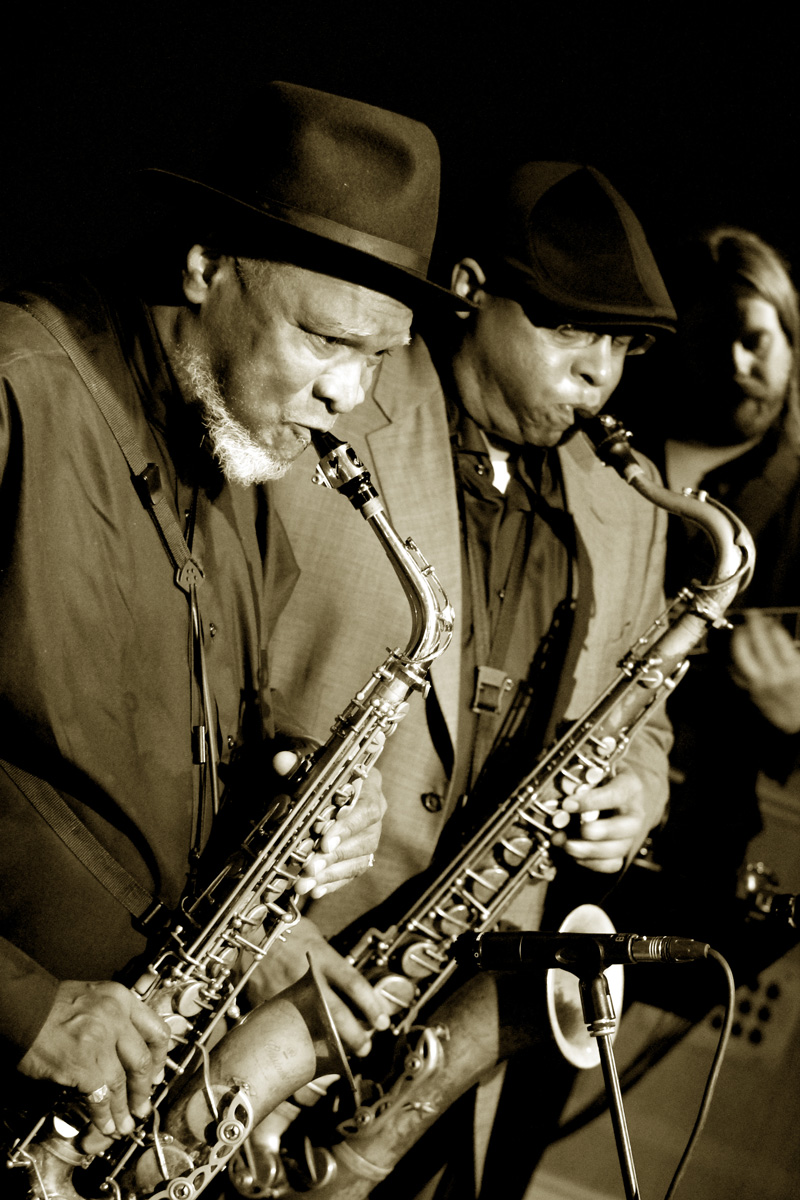
12th Street Jump features Wayne Shorter this Saturday
August 20, 2010 · No Comments
|
→ No CommentsTags: Performing
Eat Pray Love opens August 13
August 13, 2010 · No Comments
Eat Pray Love
A Film Review by Alexander Morales
With a title like “Eat Pray Love,” it’s hard not to know what you are getting into. Couple that with the fact that it’s based on the extremely popular memoir by Elizabeth Gilbert and starring the queen of love herself, Academy Award winner Julia Roberts, you kind of figure that the title is kind of literal. I’m not making fun of it, don’t get me wrong, but besides the points I made above making this a powerful female magnet for theaters this weekend, you kind of know exactly what to expect … and maybe that’s part of the problem.
Directed by the extremely talented Ryan Murphy, an executive producer (and sometimes director) on the smash hit television series “Glee” and regular writer on the now ended, but critically acclaimed “Nip/Tuck,” “Eat Pray Love” is an odyssey of discovery throughout some of the most mystically magical and magnificently beautiful countries of our world. Told in basically four acts, “Eat Pray Love” follows an unfortunately lost Liz (Roberts) as she tries to find herself inside a sad, loveless marriage. Her husband, Stephen (the always watchable Billy Crudup) is a wandering dreamer who is blissfully following the motions and feels the sting of heartbreak when Liz dramatically makes her move.
Filmed in New York, Italy, India and Bali, Murphy clearly knows how to direct his way through paradise. While not having a huge resume, Murphy’s steady hand and careful shots make this film visually stunning and careful around the personal moments that Roberts has to find herself in. At the same time, Murphy does well at allowing each environment and country to earn its own voice allowing each to become characters in the film. The places reflect Liz’s growth as much as they reflect their gorgeous heritage and people.
Roberts is at home in this film. Sensitive to the protagonist and her woes and clearly having fun within the experience, Roberts plays Liz, less like the stereotypical depressed 4o-something that I think we are used to seeing and more like a person living life for the first time. Her banter with cast mates is intriguing and as the journey goes on, she works extremely hard to keep Liz relevant, interesting and important to the viewer.
Rounding out the cast of notables is an extremely charming and grown-up James Franco (“Milk,” “Spider-Man”) the always-impressive Richard Jenkins (“The Visitor,” “Burn After Reading”) and the smoldering Academy Award winning Javier Bardem (“No Country for Old Men,” “The Sea Inside”). Not only is this a film about personal discovery, but it’s also about the men she meets along the way and for me, that is where the film kind of loses its magic.
While following Liz on her journey, the film is extremely powerful when it shows her earning her independence and making steps forward with the help of her new friends. It’s clearly set-up that the reason for this self-imposed isolation is because she can’t remember the last time she was truly alone and not in an intimate relationship. In Italy, the first stop on her quest, Liz gains so much ground and the people she meets are so interesting that unfortunately, in comparison, stops two and three on the map kind of get old fairly quickly. As beautiful as Roberts is, the scenery and flavor of Italian life really tunes well with the tempo of the film and draws the audience into her first steps of the journey. I wouldn’t go as far as say that the three countries represent the three words of the title, because, while Roberts does stuff her face delightfully with the Italian cuisine, she learns a little about all three at each step of the journey. This is both refreshing and thankful.
However, like I said, after that, it kind of gets kind of old. Liz’s time in India is interesting, but the calmness she learns in Italy all kind of falls away and rather than seeing someone continue to move forward, you kind of just see a retread of what you just saw. Same thing for Bali. The saving grace in both of these lands is the men she meets. Jenkins and Bardem are amazing to watch and each of them plays their roles well, but, at the same time, takes some of the groove out of Liz’s newness.
As a story, and maybe I’m the one just missing something, this film is extremely effective when it is about Liz and Liz alone. When a love interest is introduced, the story falls back into the basic chick-flick kind of a film and that really is too bad because the overall potential of allowing Liz to find happiness in herself alone, without the support of a man would make for a much more powerful message. Don’t get me wrong, even I was rooting for her to be happy, but her movie mojo falls away when it becomes more about the romance and less about her own, personal journey.
Overall, this is a very likable film. Well made, well acted and fun, even at its most depressing, “Eat Pray Love” is a film that women will eat up, pray friends will go see again and love to watch over and over on DVD. With an all-star cast and a wonderful leading lady, it may be easy to look past its faults, but with a run time that is entirely too long and stereotypical “Hollywood” type of happy ending, “Eat Pray Love” proves to just be another average romantic stop on the map for filmgoers.
3.5 out of 5 Bowls of Pasta
→ No CommentsTags: Cinematic